

AI Insights Today – Weekly Newsletter
Bringing Busy Professionals the Latest News in Artificial Intelligence AI Insights Today

Welcome to your weekly roundup of the 6 most significant AI developments from the past 7 days. Here are the stories featured from this past week:
Google Debuts Jules: AI Coding Agent for Everyone
Overview: Google launched Jules, its AI-powered coding assistant (built on Gemini 2.5 Pro), now widely available for both developers and novice users.
Key Features:
Behind-the-scenes automation: Clones code into a cloud VM, plans tasks, integrates GitHub issues, and outputs diffs and PRs.
Refined from feedback: UI improvements, bug fixes, multimodal capabilities, and reusing task setups stem from beta users’ input.
Accessible tiers: Offers a free tier alongside paid Pro and Ultra options.
Why It Matters:
Boosts developer productivity: Automates routine coding workflows—helpful for both experts and novices.
Agent-based coding shift: Represents a new frontier where AI can autonomously contribute to software development.
🔗 Read more: Tom’s Guide
Character.AI Introduces AI-Native Social Feed
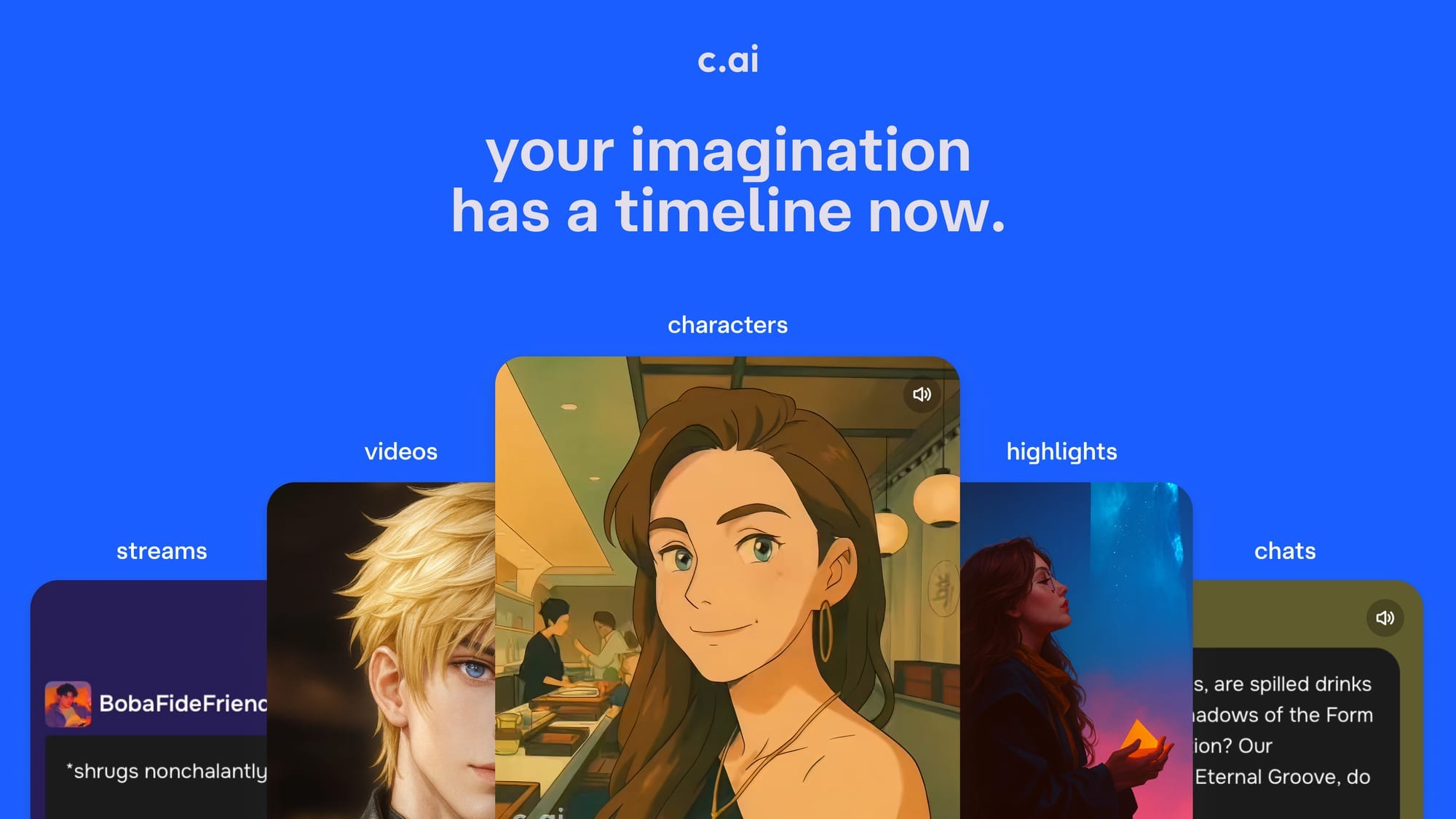
Overview: Character.AI unveiled a groundbreaking social feed featuring AI-generated characters instead of real users—blending interactive content with narrative-like entertainment.
Key Features:
Interactive feed: Users can watch, remix, like, share AI-generated chat snippets, scenes, and videos via AvatarFX.
Co-creative experience: Allows participation—users can inject themselves into ongoing dialogues.
Massive usage: Character.AI sees over 2 billion chat minutes per month.
Why It Matters:
Moves AI beyond task-driven use into the realm of social entertainment and storytelling.
Raises important safety and moderation considerations in AI-generated content.
🔗 Read more: TechCrunch
Google DeepMind’s Genie 3: Real-Time, Persistent 3D Worlds
Overview: DeepMind introduced Genie 3, its most advanced “world model” yet—able to render interactive, persistent 3D environments in real time.
Key Features:
Real-time interaction: Supports navigation and engagement with environments that remember external changes.
Rich simulations: Creates scenarios like mountain biking or bakery simulations from text prompts, for training agents.
Research preview only—not yet publicly available.
Why It Matters:
Steps toward AGI-aligned world understanding: Useful for training autonomous systems and potentially pushing boundaries toward embodied AI.
Impact spans gaming, robotics, and simulation-driven learning.
🔗 Read more: The Verge
xAI’s Grok Imagine — Free, NSFW-Capable Video Generator Sparks Debate

Overview: On August 4, Elon Musk’s xAI launched Grok Imagine, a text-to-image and video generator now free for all U.S. Android and iOS users. Alongside standard creative tools, it includes a controversial “Spicy” mode that enables explicit content generation, from erotic art to realistic pornographic videos.
Key Features:
Free nationwide rollout after being Premium-only.
Generates both stills and motion clips in multiple art styles.
“Spicy” mode bypasses the strict NSFW bans common on platforms like OpenAI and Google, though xAI claims illegal content is blocked.
Fully integrated into Grok’s chatbot for conversational prompt-to-video creation.
Why It Matters:
Breaks industry norms by openly allowing adult content, potentially carving a niche market but raising brand and legal risks.
Deepfake concerns as early users have shown workarounds to create non-consensual imagery.
Likely to draw regulatory scrutiny as lawmakers debate AI and explicit content governance.
🔗 Read more: Economic Times
GPT-5 Reception: A Mixed Bag of Praise and Backlash

Overview: Since its August 7 release, GPT-5 has polarized audiences—hailed by critics for smarter responses and improved coding, yet panned by some users for feeling less creative or intuitive than its predecessor.
Key Features (from reviews):
User-friendly routing: Business Insider notes the real‑time model selector simplifies experience for non‑technical users.
Code & reasoning gains: The New York Magazine and Tom’s Guide emphasize stronger software-building and logical performance compared to GPT‑4.
Mixed personal feedback: Reddit threads with thousands of upvotes call the model “a downgrade,” complaining of shorter, mechanistic responses and limited access to late reasoning models.
Why It Matters:
More approachable—but at what cost? Simplifying model selection may enhance accessibility, but risks reducing customization for advanced users.
Incremental, not revolutionary: Analysts see coding improvements but view the release as evolutionary rather than a leap toward AGI.
User trust on the line: The removal of legacy models and performance hiccups are prompting OpenAI to reconsider feature rollbacks and improvements.
🔗 Read more: NY Mag
Truth Social’s AI Chatbot Contradicts Trump
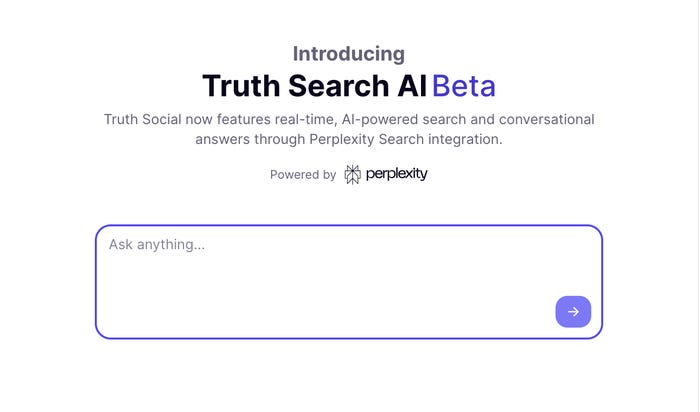
Overview: A new AI tool on Donald Trump’s Truth Social platform, built with Perplexity AI, is sparking controversy by providing answers that sometimes directly conflict with Trump’s own claims, most notably stating that the 2020 election was not stolen and labeling January 6 a “violent insurrection.”
Key Features:
Powered by Perplexity AI but intended to lean toward conservative sources.
Pulls from broader internet data, leading to factual but politically discordant responses.
Has aligned with Trump talking points in some cases, but contradictions have gone viral on social media.
No current feature to limit output to only pro-Trump narratives without manual tuning.
Why It Matters:
Neutrality vs. control: Highlights the tension between political narrative management and AI’s data-driven outputs.
Platform trust issues: May undermine Truth Social’s perceived reliability among its base.
Broader signal: Shows that even ideologically curated AI systems can generate unexpected or counter-narrative answers.
🔗 Read more: Washington Post
👉 Want this delivered to your inbox every Monday? Subscribe and stay informed on the cutting edge of AI tools, trends, and breakthroughs!